We swap dated fuse boxes for modern 18th Edition consumer units with RCBO protection on every circuit — installed, tested and certificated, usually within a single day.
Plenty of homes across Brighton & Hove — Kemptown terraces, Regency conversions, seafront flats in Hove — are still running on boards fitted decades ago. Here's what tells us a fuse box is due for retirement.
Landlords: if a five-yearly EICR under the Electrical Safety Standards in the Private Rented Sector (England) Regulations 2020 has come back with C2 observations against the old board, a consumer unit change is often the remedial work required.
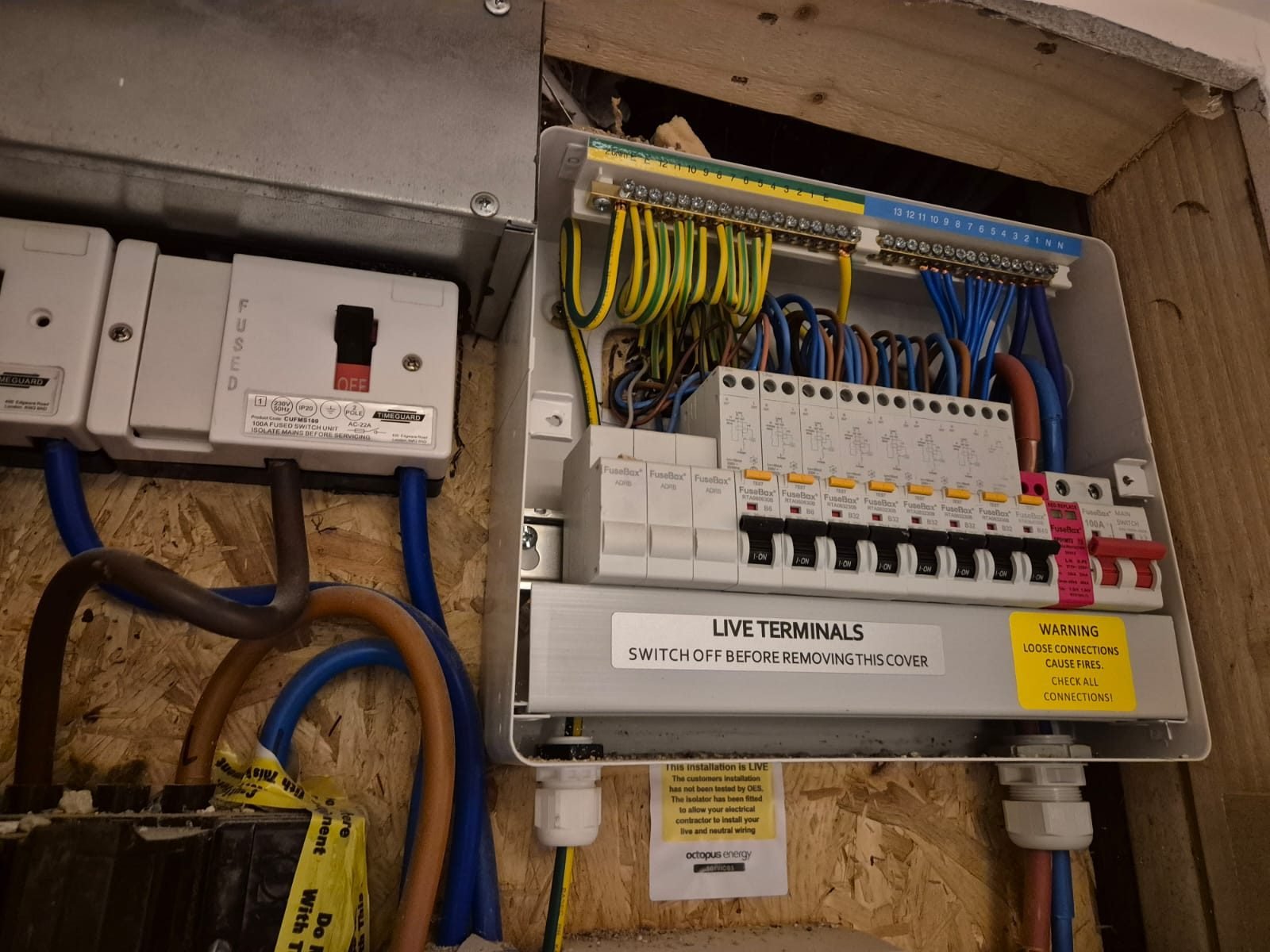
Before anything comes off the wall, we inspect and test the existing circuits. A brand-new board sitting on faulty cabling helps nobody, so we make sure we know exactly what the new unit will be protecting.
Every circuit is identified, scheduled and labelled, so the finished consumer unit reads clearly and nobody is left guessing which switch does what.
The dated fuse box comes out and a new 18th Edition consumer unit goes in its place, with an RCBO on every circuit and surge protection built in.
Every circuit is dead-tested and then live-tested against BS 7671 (18th Edition) before the installation is signed off.
You receive an Electrical Installation Certificate for the new board, with the results of every test recorded against it.
A board change is typically done in a day, with the power off for a few hours in the middle while the changeover happens — we'll agree the timing with you beforehand.
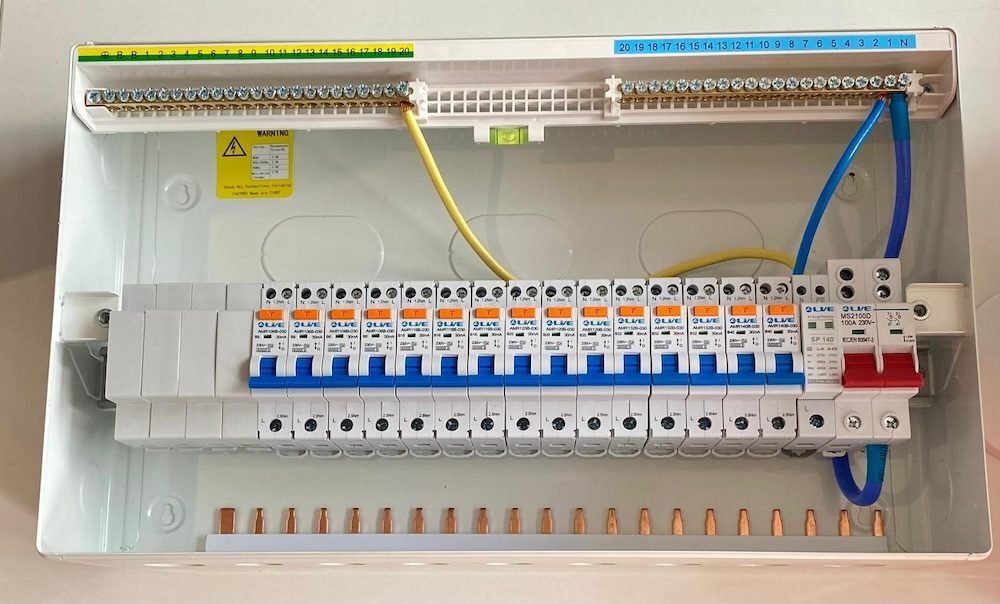
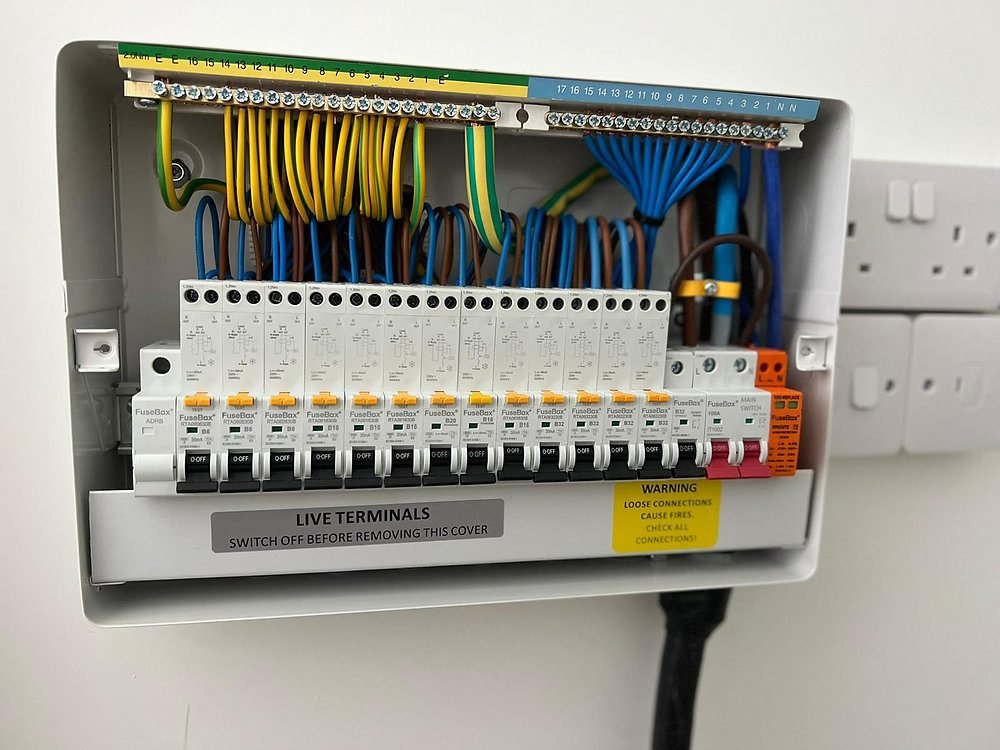
Not every "new fusebox" is the same board. These are the three types we fit across Brighton & Hove, from entry level to maximum protection — we'll recommend the right one for your home and budget at survey.
The circuits are divided into two banks, each protected by a shared RCD. A big step up from fuse wire and the most affordable modern option — but when a fault appears, one RCD drops half the house with it, and finding the culprit means working through everything on that side of the board.
Every circuit gets its own RCBO — a combined breaker and RCD sized for the job that circuit does. A fault on the freezer circuit switches off the freezer circuit and nothing else, and the board points straight at the problem. This is what we fit as standard on every board change.
Adds Arc Fault Detection Devices, which listen for the dangerous arcing caused by damaged cables, crushed flexes and loose terminations — faults an RCD or breaker can't see, and a leading cause of electrical fires. Recommended under BS 7671 Amendment 2, required in some higher-risk buildings such as HMOs, and well worth considering in period properties with long, hidden cable runs.
The old boards did their job in their day — but their day was decades ago, and the gap between then and now is wider than most people realise:
Every consumer unit we fit includes a surge protection device (SPD) at the board — standard practice under the 18th Edition, and one of the quiet upgrades that matters more every year.
An SPD absorbs the brief voltage spikes that arrive through the supply from grid switching and nearby lightning activity. Old fuse boards offer nothing against these — the spike simply passes through to whatever is plugged in.
That mattered less when a home's most delicate appliance was a kettle. A modern household runs routers, TVs, computers, smart heating controls, boiler circuit boards and EV chargers — thousands of pounds of sensitive electronics, all sitting on the same supply.
One spike through an unprotected board can age or kill the lot. The SPD takes the hit instead — that's its job.
Many older consumer units protect several circuits through one shared RCD. We fit an RCBO on every circuit instead — a small difference on paper that you notice every time something goes wrong.
A consumer unit is only as good as the cabling behind it — and we'd rather tell you that at survey stage than after the event.
If our inspection finds rubber or fabric-insulated cabling, or insulation resistance failing across several circuits, a board swap only moves the problem along. A sensitive modern board on tired wiring will trip constantly, because it's doing its job. In that situation a full rewire is the honest fix — and most rewires take 2–5 days depending on the property.
Where the cabling is broadly sound but showing its age in places, a targeted wiring upgrade alongside the new board can be the sensible middle ground. Either way, you'll get a straight recommendation, not a hard sell.
Learn more about a full home rewireEvery consumer unit change is completed and certificated in line with Part P building regulations and BS 7671 (18th Edition).
Most board changes are finished the same day, with the power off for only a few hours in the middle — timed around you where we can.
Every circuit is dead-tested and live-tested, and your Electrical Installation Certificate records the results.
From Victorian terraces to Regency conversions and flats from Portslade to Kemptown, we work in local homes every week and treat them accordingly.
"We'd been putting off replacing the old fuse box in our Portslade semi for years. The electrician arrived just after eight, had the new board in and every circuit tested by mid-afternoon, and left the cupboard tidier than he found it. Everything is clearly labelled now — no more guessing which switch does what."